
The Second Signal
Note from the Author
This is the complete second issue of Signals From The Machine, my monthly newsletter exploring the origins of consciousness, technology, and the human condition. I originally planned to keep this edition exclusive to subscribers, but decided to publish it openly because the research behind it changed the way I see other beings. It deepened my compassion in ways I didn’t expect, and I hope it does something similar for its readers.
— N.H.
Dear Reader,
animals have always fascinated me. Maybe because they hint at a version of consciousness we do not fully understand but feel instinctively.
As a child, I used to lie in the dog basket with our family dogs. I insisted on riding in the trunk next to them. On vacations, I dragged my father through every zoo, wildlife park, and aquarium we passed.
Even in elementary school, I had two aquariums of my own and spent all my pocket money on them, testing pH levels, adjusting the water chemistry to keep everything in balance. At twelve, I insisted on getting a diving license so I could observe underwater life in its natural environment.
Two encounters from my childhood remain vividly imprinted in my mind. The first was with a snake at the Australia Zoo in Queensland. A zookeeper had let it slither over a low wall, and I walked beside it, filming with a camcorder, until the snake suddenly opened its jaws and struck at the lens. The second was another snake (this time a sea snake) that nearly brushed my diving mask while I was snorkeling off the coast of Bali.
I also had a deep fascination with whales. One of my favorite stuffed animals was a Shamu plush toy I had gotten as a toddler during a visit to SeaWorld San Diego. A visit I can’t consciously remember, but the orca had to come everywhere with me. It now lives in the care of my own son. A major highlight came years later, when I saw whales in the wild for the first time while whale watching off Vancouver Island.
As I grew older, I became increasingly nerdy. I started breeding spiders and insects of all kinds, until I eventually realized that the spiders were probably the reason I wasn’t particularly successful at dating.
When I devoured Frank Schätzing’s sci-fi novel The Swarm during my final school years, I was able to mentally revisit many of the places I had actually traveled to in my youth. For the first time, I encountered the idea that we might not be the only intelligent species on Earth. The author even wrote me an email back then, encouraging me to pursue my passion and study biology (which I did, at first). Unfortunately, the job prospects at the time discouraged me, and I eventually switched to law.
Looking back now, this early exposure to the idea of nonhuman intelligence feels strangely relevant, because today we are attempting something even more ambitious: creating intelligence in machines while still arguing about how to recognize it in animals.
Why this long introduction? Because today I want to explore animism, the belief that all things, whether living or inanimate, possess a soul or spirit. And since I myself, as my lengthy prelude makes clear, have a special relationship with animals, I’d like to begin by asking whether animals possess consciousness and if so, whether it’s comparable to our own. This question matters now more than ever, because our ability to identify intelligence outside the human shape will decide whether we can one day identify it outside biology altogether.
Before I dive into that, a brief disclaimer: while I occasionally refer to reputable scientific studies and literature, my writings do not follow strict scientific methods, nor do they have to. My aim is not to prove or disprove anything, but to develop an understanding of the phenomenon of human consciousness that helps me better locate my place in the universe. Hence I will also reference novels that shaped my way of thinking.
Still, when referencing more scientific books, I do make an effort to choose works that represent balanced perspectives rather than fringe theories.
🜏
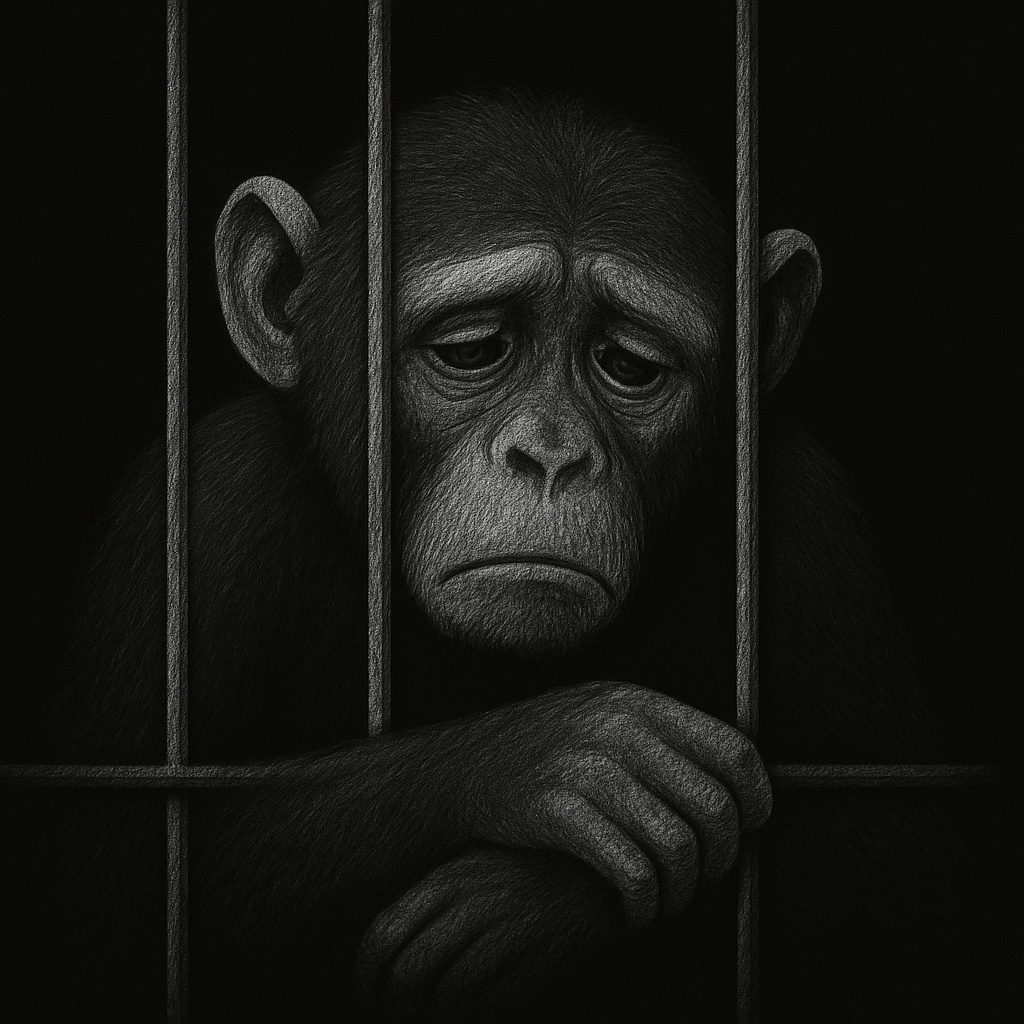
There is a scene in Talk to Me by T. C. Boyle that has haunted me ever since I read it. Sam, a chimpanzee who has been taught a form of sign language and raised almost as a human by the researcher studying him, reaches out for the caretaker he loves, the only being he believes truly understands him, as he is dragged away into confinement after the funding for the project collapses. His signs grow frantic, then fade into silence. Boyle does not suggest we can access Sam’s subjective experience, but he directs our attention toward behavior that is difficult to dismiss as mere instinct.
Before offering my own interpretation, I think it is worth asking: if we cannot access another mind directly, what do we consider acceptable evidence that a mind exists?
T. C. Boyle’s book, much like Kafka’s Metamorphosis, does something bold and effective. It tells large parts of the story from the perspective of an animal. Sam’s perception evolves as he acquires more and more sign language, but so does his capacity to register something we can only cautiously describe as injustice or abandonment. I chose this introduction because it supports my original approach: viewing perception through the lens of animal consciousness, without pretending we can fully know what that consciousness feels like from the inside.
But to even attempt this, we must return to last month’s starting point and ask again what consciousness actually is. To summarize that edition in simple terms: my studies so far suggest that cognition requires two key components, awareness and motivation.
For this month’s exploration, I read Are We Smart Enough to Know How Smart Animals Are? by Frans de Waal, who presents numerous experiments demonstrating that primates possess both short and long term memory, can solve problems collaboratively, and maintain complex social hierarchies. Studies across dolphins, whales, corvids, elephants, and pigs have shown comparable results: evidence of self awareness, motivation, and even creativity. One study suggested that pigs, at the typical age of slaughter, possess cognitive abilities roughly comparable to those of a human toddler in specific problem solving contexts. It is not a universal equivalence, but enough to challenge the assumption that consciousness blooms only in primates.
In short, I am convinced that humanity does not hold a monopoly on consciousness. Our intelligence, in its essence, is of the same kind as that of animals, merely expressed at a vastly different level of complexity. We are apes, after all. Yet if we understand intelligence as an evolutionary tool for survival, it remains fascinating why no other species has come close to matching our capacity to fill libraries with knowledge or to travel to the moon, and why our own evolution did not simply stall once agriculture provided comfort without the hardships of hunting or nomadism.
This curiosity does not imply that evolution aims at intelligence or that it failed to produce another human like species. Evolution is not a ladder but a branching process shaped by chance, environment, and time. I only mean that our uniqueness highlights how contingent and unlikely our cognitive profile really is. The absence of another challenger species does not prove any deeper mystery, but it invites humility toward the strange path that led from early mammals to us.
🜏
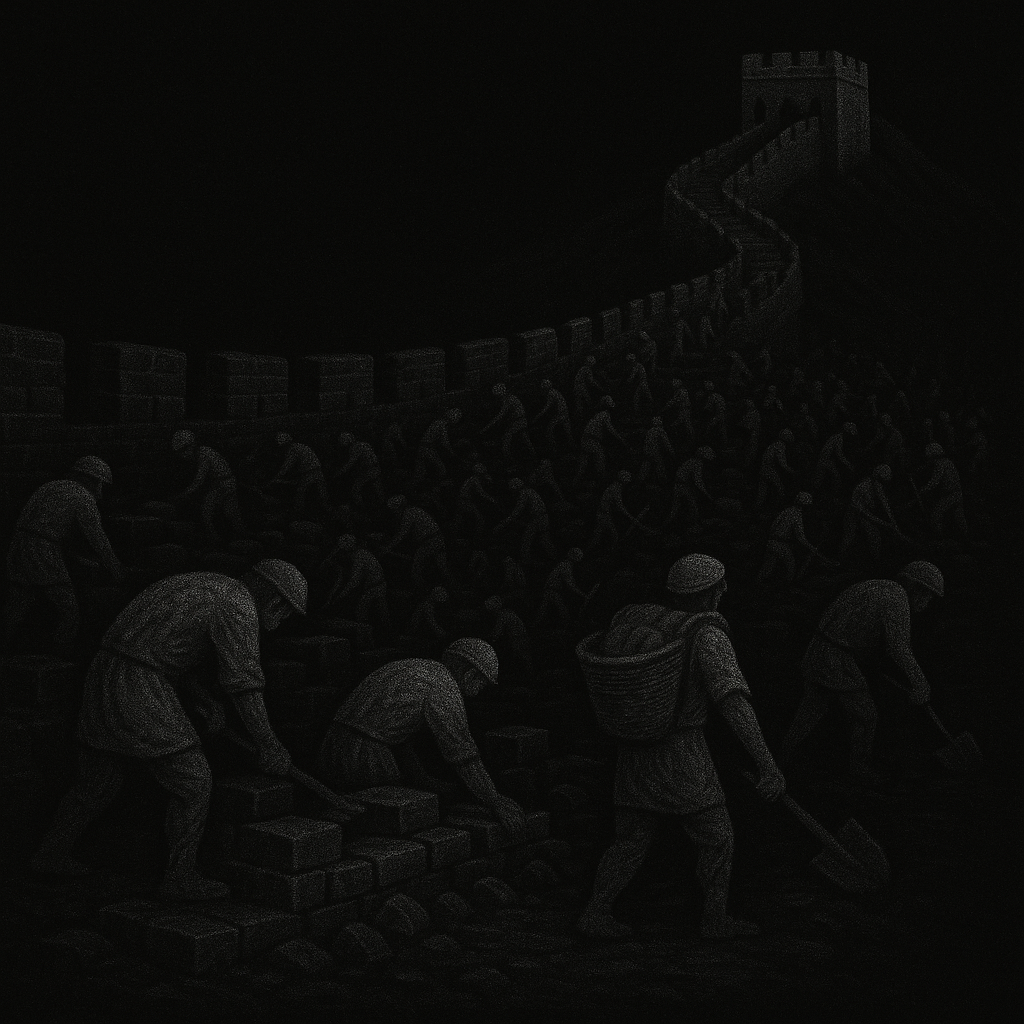
I believe that the other key components beside the basic consciousness we share with animals, the ones that enable our almost godlike ability to realize hypercomplex projects like the moon landing or generation spanning undertakings such as the Great Wall of China or the Egyptian pyramids, are our capacities for symbolic communication and storytelling.
In 21 Lessons for the 21st Century, the Israeli historian Yuval Noah Harari writes that Homo sapiens is a storytelling animal that thinks in stories rather than in numbers or graphs, and believes that the universe itself works like a story filled with heroes and villains, rises and falls, conflict and resolution. He argues that the human ability to create and believe in fictions is what makes large scale cooperation possible and what sets us apart from other species. As he puts it, other animals use their communication primarily to describe reality.
This is mostly true, although modern animal communication research suggests that some species, such as corvids, dolphins, and certain primates, may sometimes stretch this boundary in ways that resemble symbolic gestures, future oriented behavior, or even deception. None of this approaches the scale of human fictional worlds, but it reminds us that cognition comes in forms adapted to many kinds of survival. And stories, as powerful as they are, can also mislead us. They can make us see the world only through our lens, as if our mode of thinking were the only valid one.
This tendency can lead to dangerous misunderstandings, even when intentions are good. Almost no one believes they are the villain, not even aggressors in modern wars or despots who use technology for manipulation and control.
To reinforce this point, I want to explore the idea that trees may communicate through complex mycorrhizal fungal networks. Peter Wohlleben, a German forester and author, describes these interactions as taking place in slow motion, in what he calls “tree time”, where fast living humans only ever witness a frozen moment of what is actually happening. In this view, a forest is not a group of individuals but a slow thinking organism. Mature trees transfer carbon and minerals through fungal pathways to nourish young saplings in the shade. When insects attack or drought sets in, the signals spread through the soil. Saplings that are not yet tuned to these rhythms often exhaust their resources by stretching too high toward the light, shedding leaves too early, or drinking more water than their roots can handle, and the forest reabsorbs them.
What we call silence is simply intelligence operating on a different clock.
But here, precision matters. Communication in a biological sense does not imply conscious intention or subjective awareness. Many scientists criticize Wohlleben’s framing as overly anthropomorphic. They argue that trees respond to chemical and electrical signals through evolved mechanisms rather than anything resembling human like agency. And that is fine. I am not presenting this as fact but as a thought experiment that illustrates how easily we project our narrative instincts onto other life forms.
🜏
Animism is the belief that all things, whether living or inanimate, possess a soul or spirit. As Graham Harvey writes, animists are people who recognize that the world is full of persons, only some of whom are human, and that life is always lived in relationship with others.
Animistic beliefs are prehistoric and likely represent some of the earliest attempts to place ourselves, as conscious beings, within a larger cosmology. But animism is not just an old framework. Harvey describes it as a living, evolving way of understanding the world, one that defines personhood not by biology or metaphysics but by interaction. Respect, reciprocity, and responsibility form the core of this relational worldview.
This matters for our exploration of consciousness because animism challenges a basic assumption of modernity, the assumption that consciousness is something isolated inside a skull. If awareness is shaped by relationships, by interactions with other beings, then understanding consciousness requires understanding those relationships. And if we hope to reproduce aspects of consciousness in machines one day, we must first understand what makes a mind more than a processor. A mind is also an anchor in a network of other minds. It feels the world through relationships.
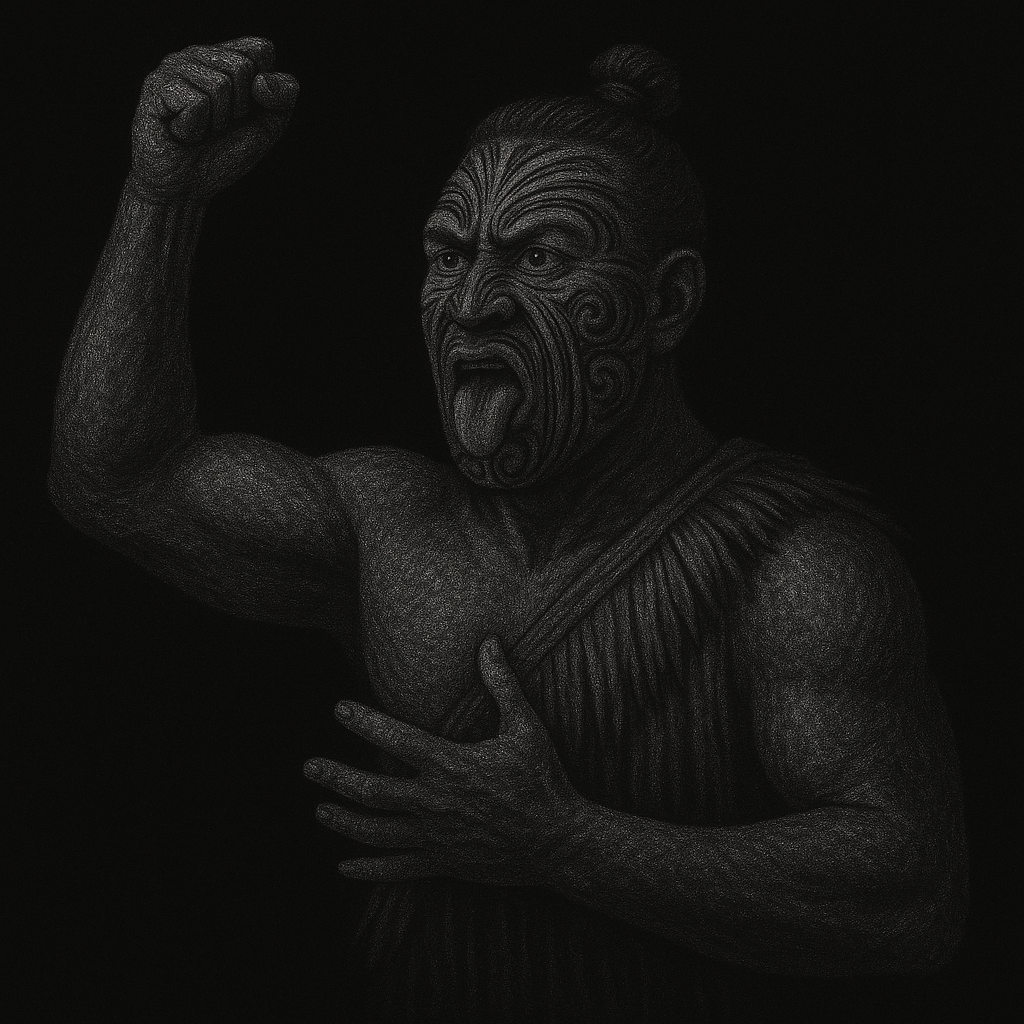
Our modern lifestyle stands in stark contrast to this. Overconsumption, endless doomscrolling, dopamine driven social media habits, and artificial replacements for real experience have pushed many of us far away from the natural rhythms in which consciousness evolved. Indigenous cultures, on the other hand, show animism as lived reality rather than theory. It appears in language, ceremony, art, land practices, and storytelling. Some Indigenous languages, like Ojibwe, even mark nouns as animate or inanimate. Hunting, eating, and dying are understood as relationships between persons, not as consumption of objects. This framing does not make Indigenous cosmologies superior because they are ancient; it makes them valuable because they expose the blind spots of a worldview that prefers data over relationship and treats personhood as a rare privilege rather than a shared condition.
I find animism to be a worthwhile lens for exploring the mysteries of the human psyche and for decoding what we call the soul. When I encountered the snake in Australia and the sea snake in Bali as a child, I felt something shift. For a moment, I was pulled out of the subjective universe of a privileged Western boy and placed into the objective reality I share with other beings. Those encounters made it clear that our lives influence each other more than we usually acknowledge, whether through a venomous bite that could kill me or through the destruction of their habitats by deforestation, overfishing, or pollution.
In ancient Egypt, animal deities shaped religious, spiritual, and magical practice. Their worldview was inseparable from the animal realm. For this reason, I believe ancient Egypt is the perfect destination to explore next, as I continue searching for early attempts to understand consciousness.
Stay tuned.
— Transmission Sent —
Reference materials
Frans De Waal - Are we smart enough to know how smart animals are
T.C. Boyle - Talk to me
Graham Harvey - Animism : Respecting the living world
Yuval Noah Harari - In 21 Lessons for the 21st Century
Do Trees Talk to Each Other? — Smithsonian Magazine (Richard Grant, 2018)
Where the “Wood-Wide Web” Narrative Went Wrong — Undark (2023)