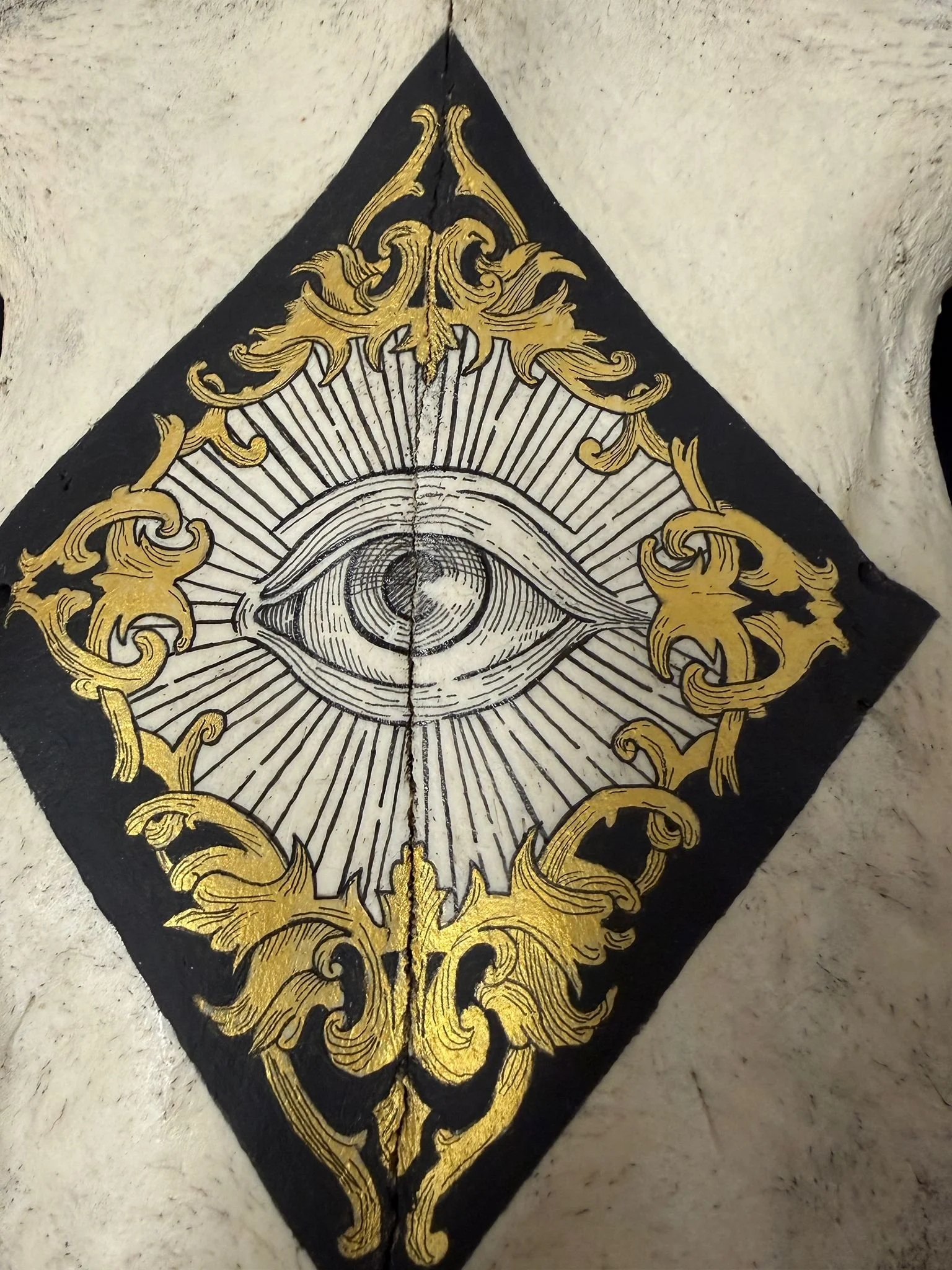
ANIMA
By Niklas Hanitsch and Sonia Sambucini
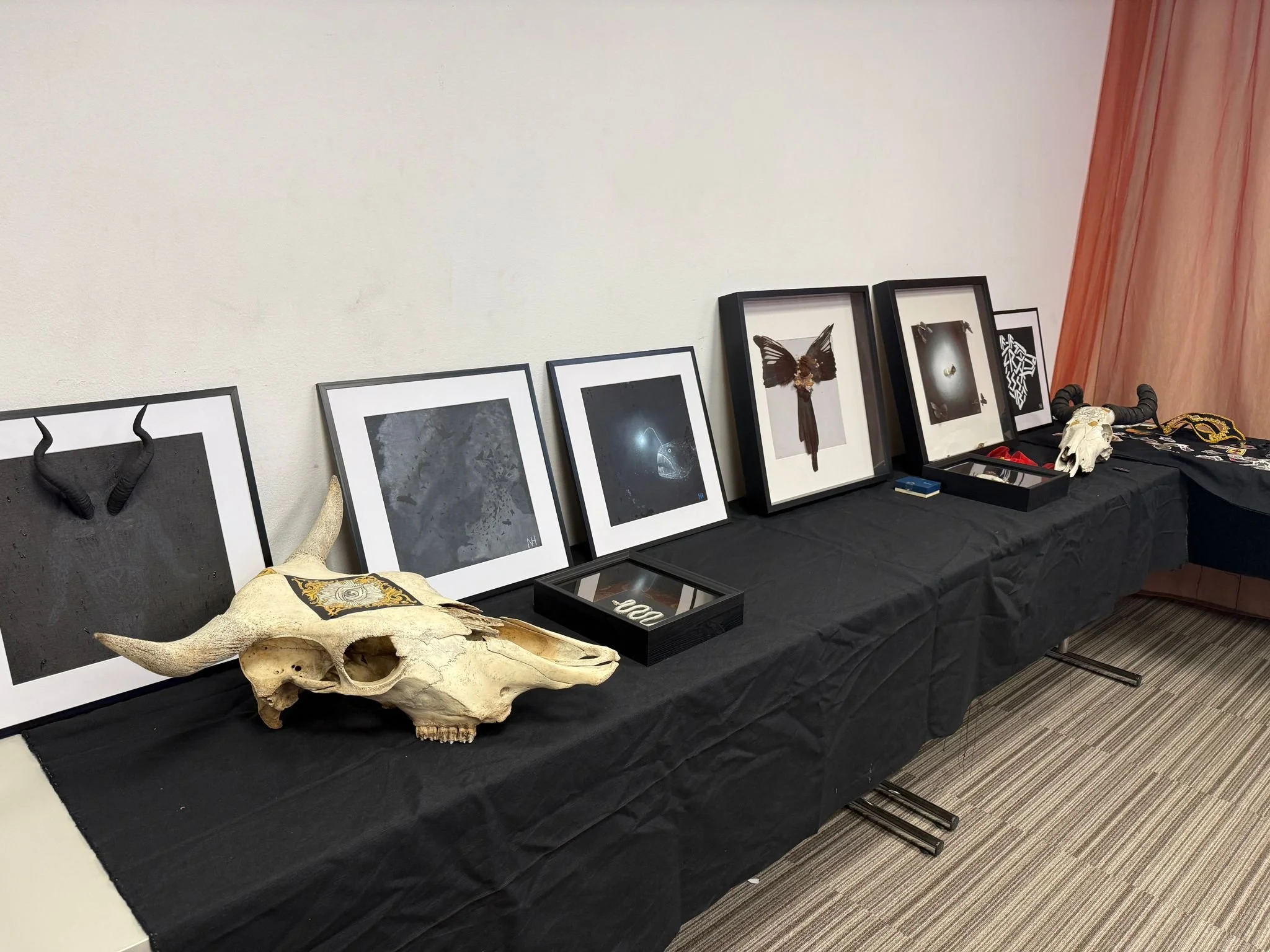
Earlier this year, Sonia Sambucini and I showed ANIMA, a joint exhibition on animal consciousness in Milan. Sonia is a biologist and taxidermist, I paint and write about consciousness, and the exhibition brought both together: reddened bone and taxidermy, paintings, and at its center a guided experience that led visitors through the sensory worlds of animals and ended in front of photographs of their own pets. Milan was not a random choice. It is a city built on human ambition, fashion, finance, design, all of it monuments to what our species thinks of itself. It felt like the right place to spend an evening asking what the other species think. What follows is the text we wrote about why this exhibition exists. It begins with a confession from both of us.
We came to this question from different directions. One of us had spent years killing animals and trying to square it with himself. The other had spent years refusing to eat them, and then started again, and was trying to find a new balance for this to coexist with her ethics. When we sat down to design the experience at the center of ANIMA, our joint exhibition in Milan, we saw our two positions resolve into one.
Niklas
I wanted to study biology, but chose law instead, for reasons that made sense at the time and mean almost nothing now. The animals followed me anyway, because I hunted, and hunting is something that won't let you keep biology at arm's length. You learn about animal's habits, their anatomy and how to end it cleanly. And then one day you're standing over something that was alive a moment ago and isn't anymore, and any abstraction you had going evaporates. You are left alone with the body and the fact that you are the reason it no longer breathes.
I started hunting because it has a long tradition in Germany, but after the first kill I started actually thinking about food more. I made myself a rule: to only eat the meat that I'd hunted. Only wild animals, nothing that had spent its life in a shed. For three years I ate venison and nothing else (but veggies). I was morally satisfied. A clean rule is a very efficient way of not having to look at anything too hard.
The rule broke the way rules usually do. There was a restaurant with stars on the door and I told myself that here, of all places, it probably wasn't that bad. After that the exceptions started coming faster. Little by little I stopped thinking about where the animal had come from, which was exactly the thing I wanted to avoid. I wanted to make conscious food choices. The rule had become something to point out while in reality I stopped paying attention.
Last year I started paying attention again. Stopped hunting and meat eating, both at once. Because finally I didn't trust myself to keep looking at what I was eating. And this confession is what brought me to this exhibition, because the question I'd been circling for years had nothing to do with diet in the end. It was about whether the thing I was killing, or eating, or simply not thinking about, was a someone or a something.
Sonia
I got to the same question from the other direction. I was a vegetarian (almost vegan) and followed personal rules based on ethics that I would still like to follow in their entirety without having to compromise. The line was obvious, and I was on the right side of it. Then my health changed, and I started eating hunted meat, slowly, and the certainty didn't make it through.
Death has never felt abstract to me. As a biologist and taxidermist I work with wild animals and with the ones that live in our homes, and in my practice I don't look away from death. I turn toward it. In the practice of reddening the bones, a dead animal isn't waste. The work is about keeping alive the memory of something that was sentient, sometimes letting one creature become a stand-in for the many we'll never encounter. Taxidermy, in that context, is not decoration. It's a confrontation with mortality, our own included, and with whatever we've been quietly hiding behind.
When I started eating hunted meat again, the friction wasn't philosophical. It was with my own ethics, my own beliefs, things I actually held. I couldn't retreat to the old certainty because I'd walked out of it myself. What I found there is the same thing Niklas found when his clean rule collapsed: there is no position that relieves you of having to keep looking. The grayscale is uncomfortable for exactly that reason. It won't hand you a verdict.
Nature won't help you with this. Nature doesn't judge and we're no one to judge her laws. The moral weight of killing and eating is entirely ours. There's nothing out in the wild that grounds it or takes it off our hands. The mistake is expecting a clean answer from somewhere out there, or thinking that if you just find the right rule, you can sidestep death altogether.
The animal mind
Neither the exhibition nor the experience at its center was trying to argue a position on what people should eat. We wanted something harder to argue with than a position: an experience. We wanted visitors to feel, even briefly, that an animal is a subject. That the world contains persons who are not human, and that you are only one of them.
This sits in odd tension with a conviction we both hold, and we think that's worth sitting with rather than smoothing over. We both believe in the primacy of the individual mind, the isolated intelligence that distinguishes itself from the undifferentiated flow of the world around it. That belief can be read as permission to treat every other creature as backdrop. We think it's the opposite. Recognising consciousness where convention tells you there isn't any is not a surrender to nature. It's a harder act than dismissal, and a more demanding one. Facing death seriously means facing it without flinching and without the comfort of pretending the thing that died didn't feel it.
In an earlier joint work we faced outward, toward the glacier, toward what we're destroying. In Milan we turned inward, toward the animal mind itself, on the theory that the destruction out there starts as a failure of perception in here. We built the experience around Plutarch's Grillo, the companion of Odysseus who Circe turned into a pig and who refuses to be turned back, because he's found something in the animal state that human reason has lost. After his argument, visitors leave the room and move through three stations designed to break the human sensorium apart: sound and vibration at the threshold of hearing, the world read entirely through scent, vision fractured into something like the compound eye of an insect. Then in darkness a guided meditation asks them to feel their hands become paws, and the constant narrating voice in their head go quiet, until what's left is attention without commentary, and a wordless memory of having once been called by name. When they open their eyes, they're looking at their own animals.
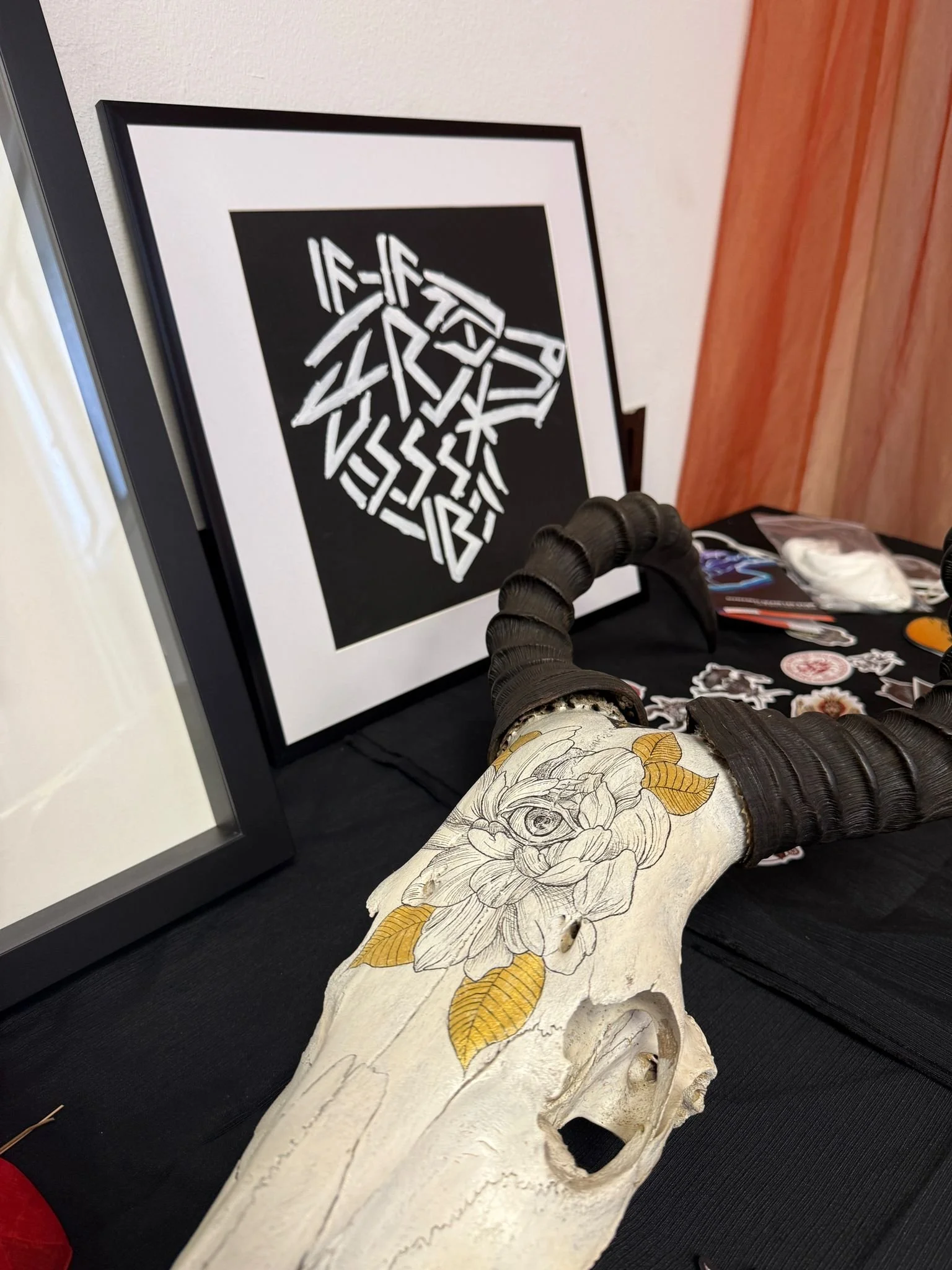
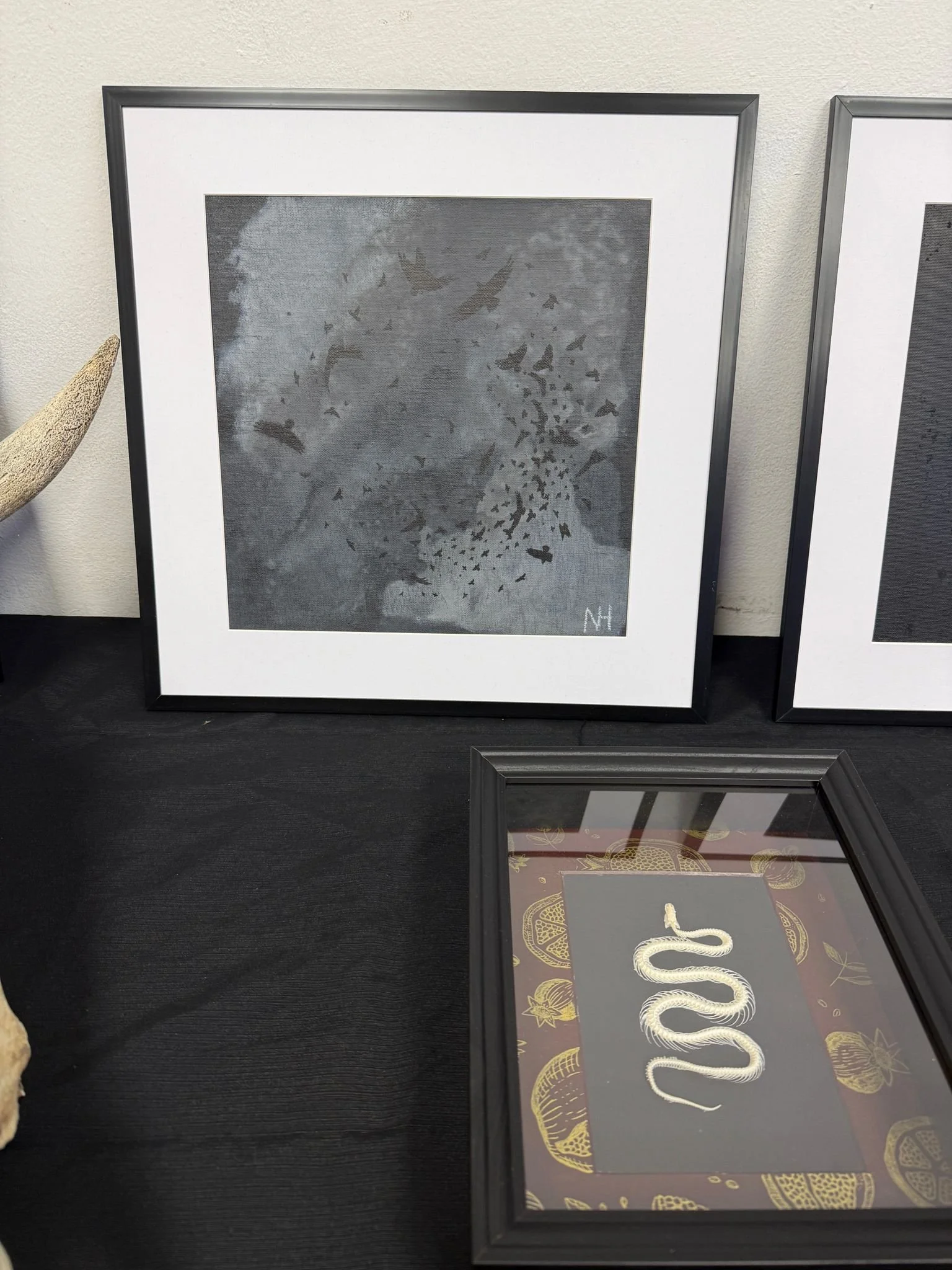
The exhibition carries the same intent into objects. The taxidermy in this case isn't a trophy and isn't a curiosity cabinet. It's reddened bone, a sentient being held in memory, placed in front of the viewer's own mortality and fear.