
Alone with My Own Hunger: My First Solo Exhibition
My first exhibition was a group show, which meant I could hide behind the other artist’s work. If people hated my work, there were others to carry the room. That comfort was missing on March 19th, 2026, when I held my first solo exhibition.
The event took place at the Little Sister Gallery in Hamburg-Sternschanze and was titled “Singur cu propria foame,” Romanian for “alone with my own hunger.”
Let me explain what I mean by that. It is about a specific kind of loneliness. Not the loneliness of being physically alone, but the loneliness of seeing clearly in a room full of people who prefer not to. And the hunger that remains after every achievement, every milestone, every external validation. A hunger that has nothing to do with material need and everything to do with a persistent emotional void that success, relationships, and stability never quite fill. And what ultimately guided me towards a path of spirituality.
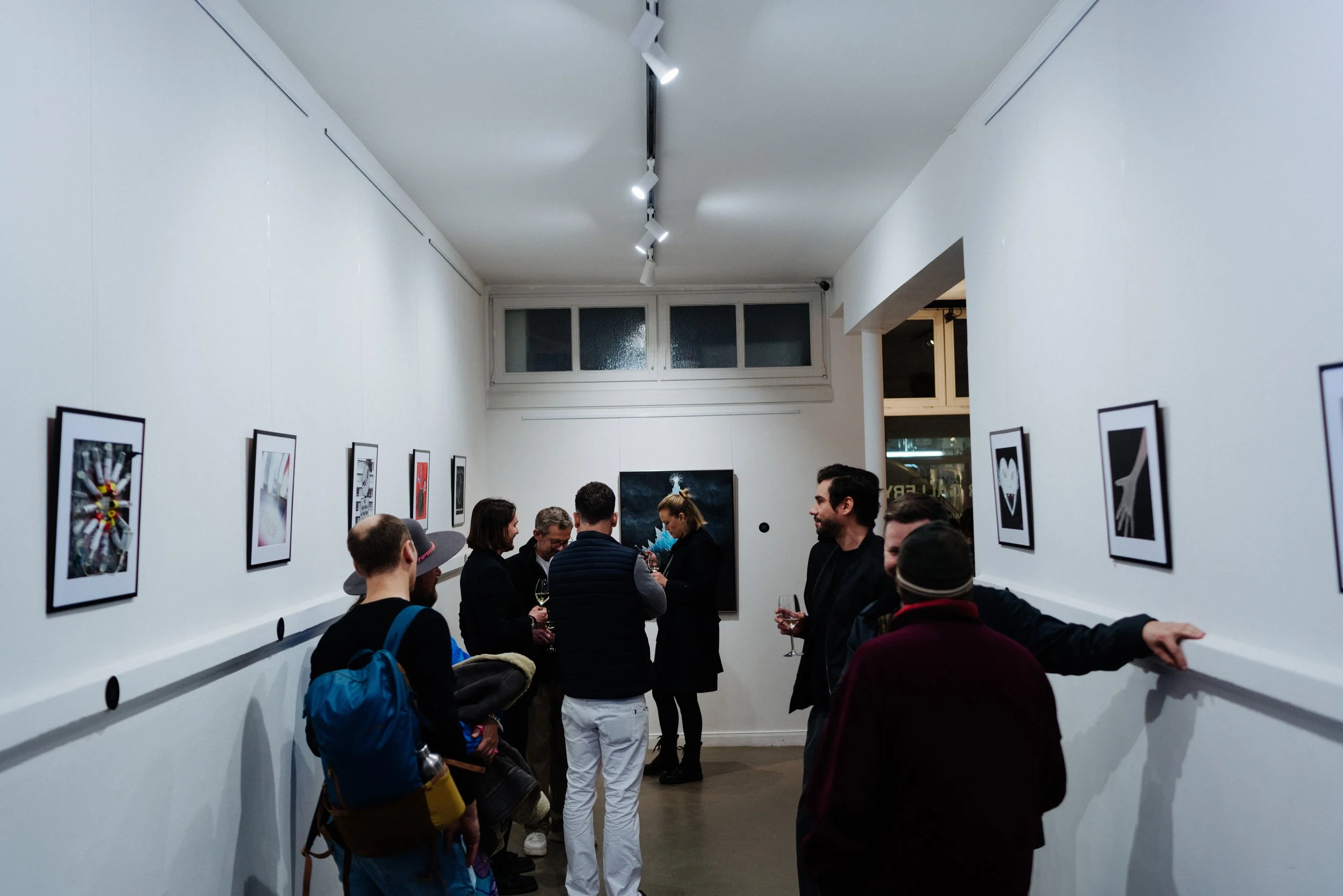
At my artist talk, I answered the question of why I started creating art.
In my day job I run a software company with about fifty employees, and alongside that I am building a whiskey distillery on a farm I own. One would think that these ventures offer ample opportunity for self-realization and creative expression. But in reality they are mostly responsibility and a lot of debt. Add fatherhood to the equation and you arrive at a life where people depend on you to function around the clock, whether you are sick, exhausted, or quietly falling apart. There is no mechanism built into any of these roles that allows me to stop the grind and process the emotions that accumulate under that kind of pressure.
Art became that mechanism for me. As a practice of giving form to what would otherwise remain compressed and unexamined. The emotions do not disappear, but they move from the inside to the outside and tension that otherwise would build up inside me gets released.
Another question I explored in my talk was: why is the work so dark? Why would someone who, by most external measures, has a good life produce art that looks like it was produced by a 13 year old goth girl that is going through a certain phase in life? The answer I gave to that is, that the darkness in my work is only partly autobiographic, where it aims to process childhood trauma or such. But mostly it is a mirror held up to the world that inspires it. In the past ten years, the trajectory of geopolitics and our society at large has been unmistakable for me. Democratic institutions are eroding. The rule of law is being hollowed out in countries that once defined it. And if we are truly about to repeat a history I was taught my entire life should never be repeated, I want to leave behind traces of resistance. Not grand gestures, but evidence that I saw what was happening and refused to carry on as if everything were normal.
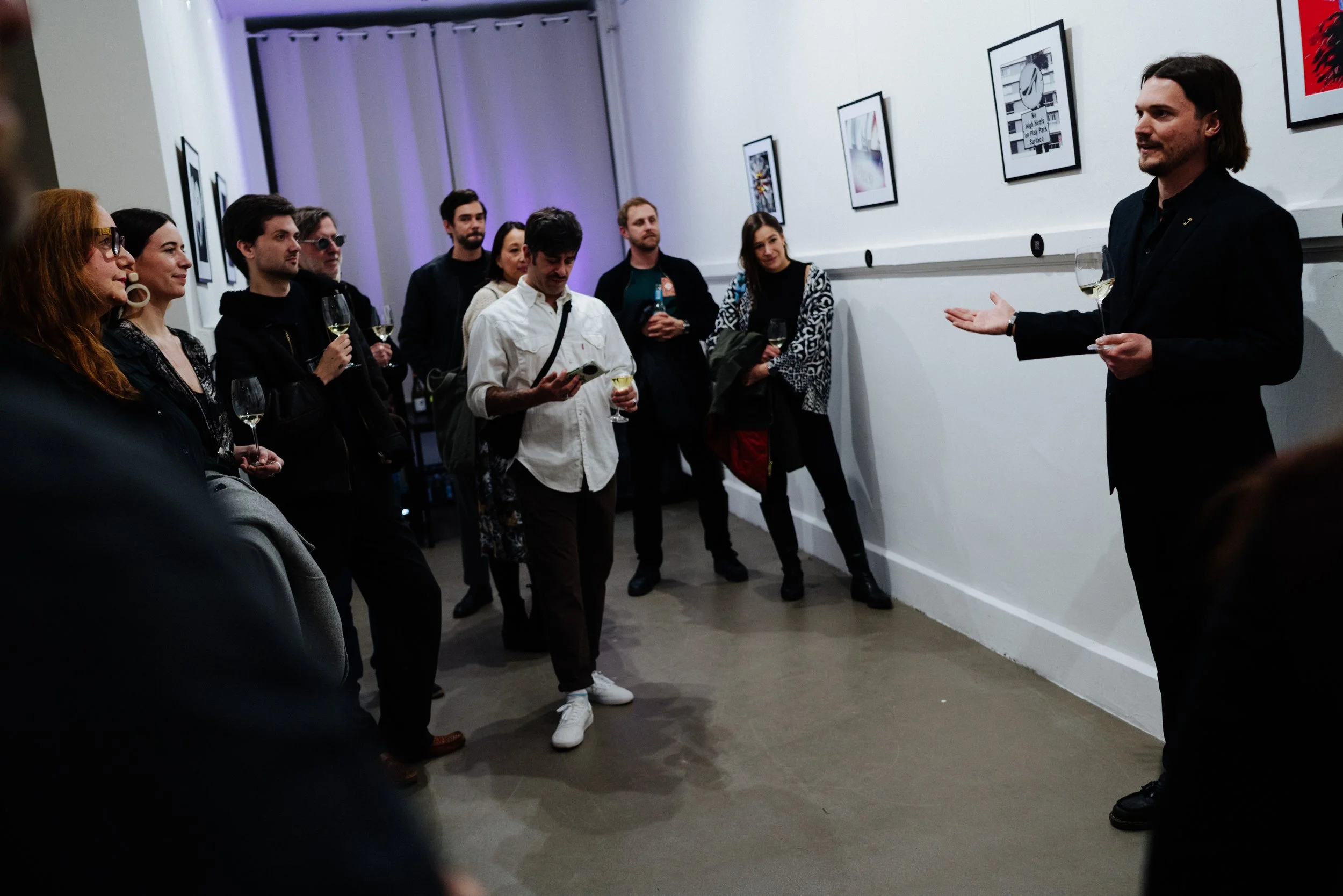
To quote Max Liebermann at the Nazi seizure of power: “I couldn’t eat as much as I would like to vomit.” Several of my works circle around this feeling.
I gave my first artist talk at this exhibition. Standing in front of approximately fifty people and explaining not just the work but the reason for its existence was a great experience. In the talk I said that I love the German Grundgesetz, our constitution, the document we brought into existence after the horrors of the Third Reich. And that I am ready to play my part in defending its principles like human dignity, personal freedom, equality before the law, freedom of expression, arts and sciences, freedom of movement and the rule of law. But I also admitted that I am just one person among over eighty million Germans, living in Hamburg in my wealthy and rather left-leaning bubble. My art is one of my attempts at raising my voice beyond that bubble.
Something unexpected happened at the exhibition. Two of my works sold on the evening of the vernissage, one of them to the board member of a local bank. I mention this not out of vanity but because it confirmed something I had been unsure of: that this work can reach people outside of my immediate circle, people who have no prior relationship with me or my worldview, and still land. The transaction itself was secondary. What mattered was that someone (and in this case a seasoned business professional and banker) looked at a piece born from genuine darkness and said: I want to live with this. That is a form of recognition that no amount of social media engagement can replicate.
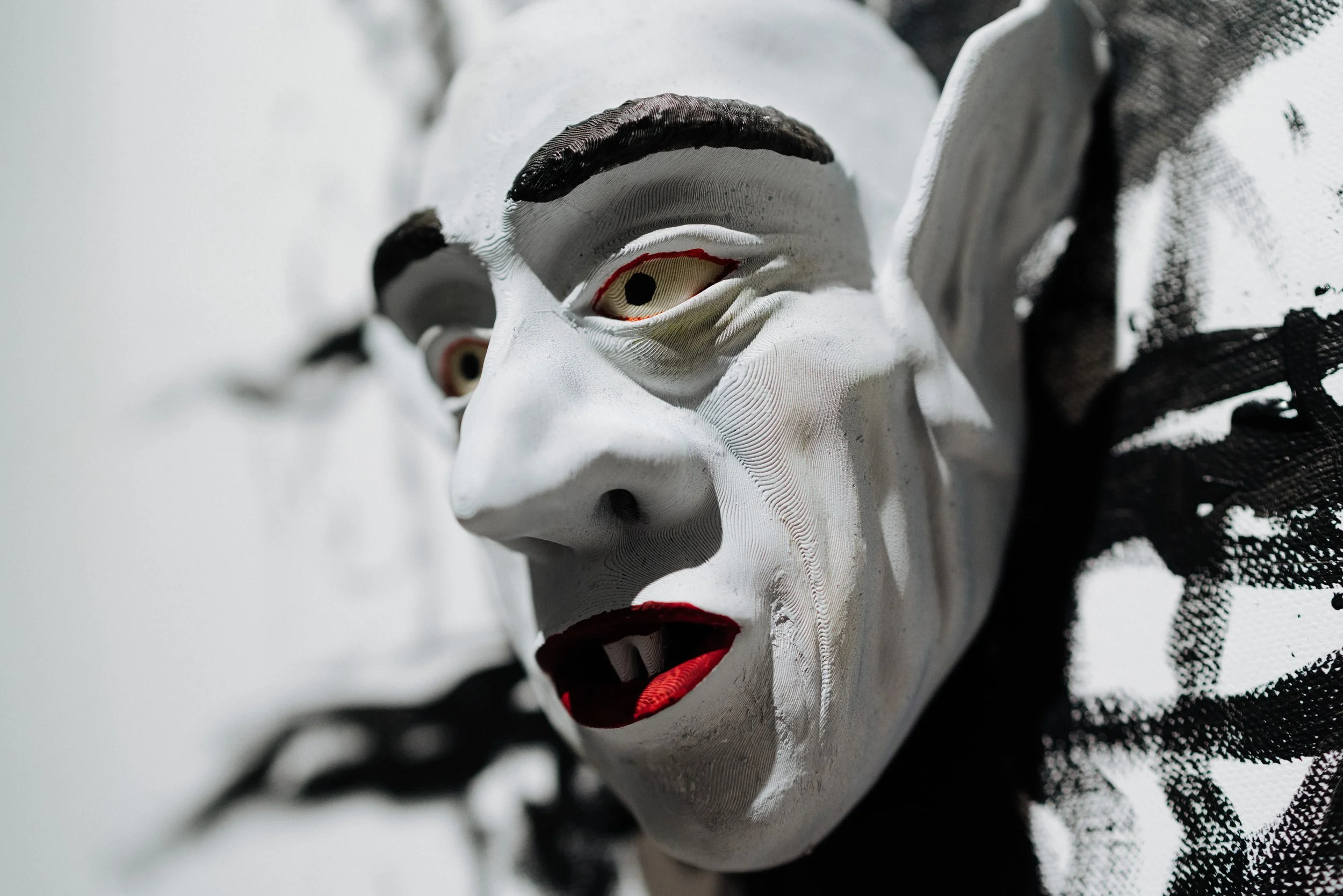
Looking back at my first exhibition, the fear of rejection and ridicule has not vanished. But it has been restructured. The group show proved I could survive exposure. This solo show proved I could stand alone in it. The distance between those two points is where the real growth happened. Not in the paintings. Not in the gallery. In the decision to keep going and pushing my own boundaries.
Niklas Hanitsch